
Keeping your property safe with the right smoke detection system& smoke detector grades isn’t just best practice — it’s essential for life safety and compliance with UK guidance. This guide explains smoke alarm grades and categories, what they mean, and how they apply to different property types.
Why Smoke Detectors Matter
Smoke alarms give early warning of fire, saving lives and reducing damage. In the UK, building safety guidance and landlord regulations ensure detectors are correctly installed and maintained.
For official guidance, see the UK Government’s Approved Document B (Fire Safety) here:
👉 https://www.gov.uk/government/publications/fire-safety-approved-document-b GOV.UK
For rules on smoke alarms in rented properties:
👉 https://www.gov.uk/government/publications/smoke-and-carbon-monoxide-alarms-explanatory-booklet-for-landlords GOV.UK
Smoke Alarm Grades Explained
The grade of a smoke alarm system tells you how the system is powered and the level of reliability. These grades come from the British Standard BS 5839-6 which is widely referenced in fire safety guidance. Aico
| Grade | What it Means | Where It’s Used |
|---|---|---|
| Grade A | Full fire alarm system with control panel + backup battery | Larger buildings, HMOs with many occupants |
| Grade C | Detectors linked to a fire alarm control with shared power | Larger homes or complex layouts |
| Grade D1 | Mains-powered smoke/heat alarms with sealed backup battery | Most modern homes & HMOs |
| Grade D2 | Mains-powered alarms with replaceable backup battery | Standard residential properties |
| Grade F1 | Battery alarms with tamper-proof batteries | Some owner-occupied homes |
| Grade F2 | Battery alarms with user-replaceable batteries | Basic residential smoke alarms |

Smoke Alarm Categories (LD1, LD2, LD3)
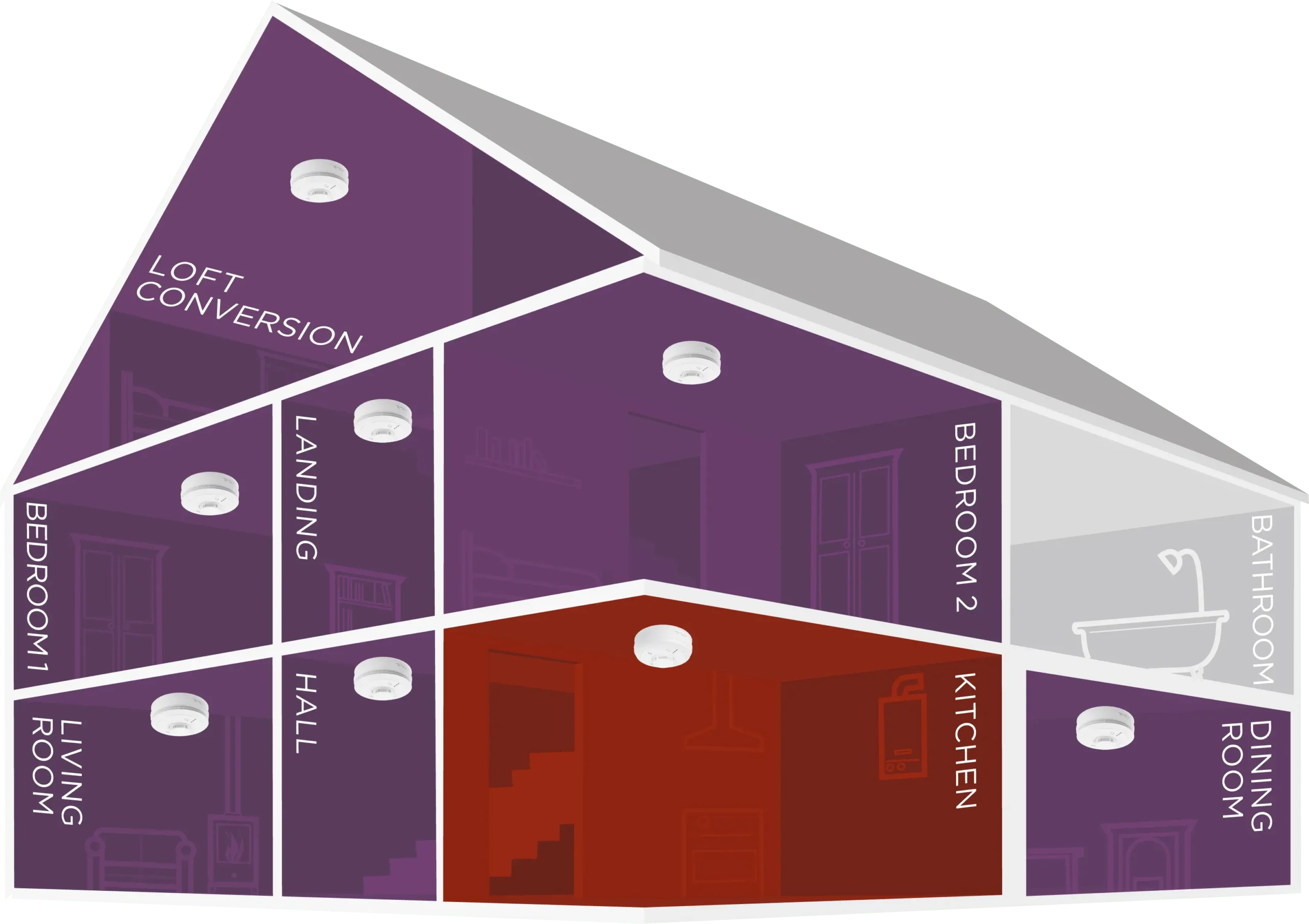
Categories relate to how much coverage your smoke detection system provides within the property. Aico
| Category | Coverage | Protection Level |
|---|---|---|
| LD1 | All rooms where a fire could start + escape routes | Maximum protection |
| LD2 | All escape routes + high risk rooms (e.g., kitchen & living room) | Medium protection |
| LD3 | Escape routes only (hallways, landings) | Minimum protection |

How These Apply in UK Properties
Owner-Occupied Homes
Often installed to at least Grade D2, Category LD2 for good protection.
Smoke alarms should be on every floor and in all main living areas.
Heat alarms are recommended for kitchens (they don’t replace smoke alarms). Aico
Rental Properties
Landlords must have at least one working smoke alarm on every storey of the property where there’s living accommodation.
👉 See gov.uk guidance on this requirement here: https://www.gov.uk/government/publications/smoke-and-carbon-monoxide-alarms-explanatory-booklet-for-landlords GOV.UKBest practice is Grade D1, Category LD2 (mains-powered + battery backup with good room coverage). GOV.UK
Houses in Multiple Occupation (HMOs)
Often require more robust systems — sometimes Grade A or D1 with LD1 coverage, depending on size and local fire risk assessments. Lambeth Council
Tips for Compliance & Safety
✔ Test alarms regularly — at least monthly.
✔ Replace smoke alarms every 10 years or per manufacturer guidance.
✔ Interlinked alarms mean if one detects smoke, all alarms sound — critical in multi-storey homes. FireQueen

Summary
Understanding smoke alarm grades and categories helps you choose the best system for your property:
Grades = how the alarms are powered and backup reliability
Categories = how much of the home they protect
LD2 with Grade D1/D2 is a common recommended standard for UK homes.
Stay compliant. Stay safe.





0 responses
Great article. I was researching smoke alarm requirements for my property and this helped clarify the different grades and their uses. Very informative and easy to understand.
Thanks for sharing this. Fire safety is extremely important, especially in rental properties. Understanding the different smoke alarm grades helps landlords make better decisions about installation.
Very helpful explanation of smoke detector grades in the UK. I didn’t realise there were different categories like Grade A and Grade D systems. This guide makes it much easier to understand which type is suitable for different properties.